Sunday, 29 June 2025

Short fiction: Evolution

The world is turning

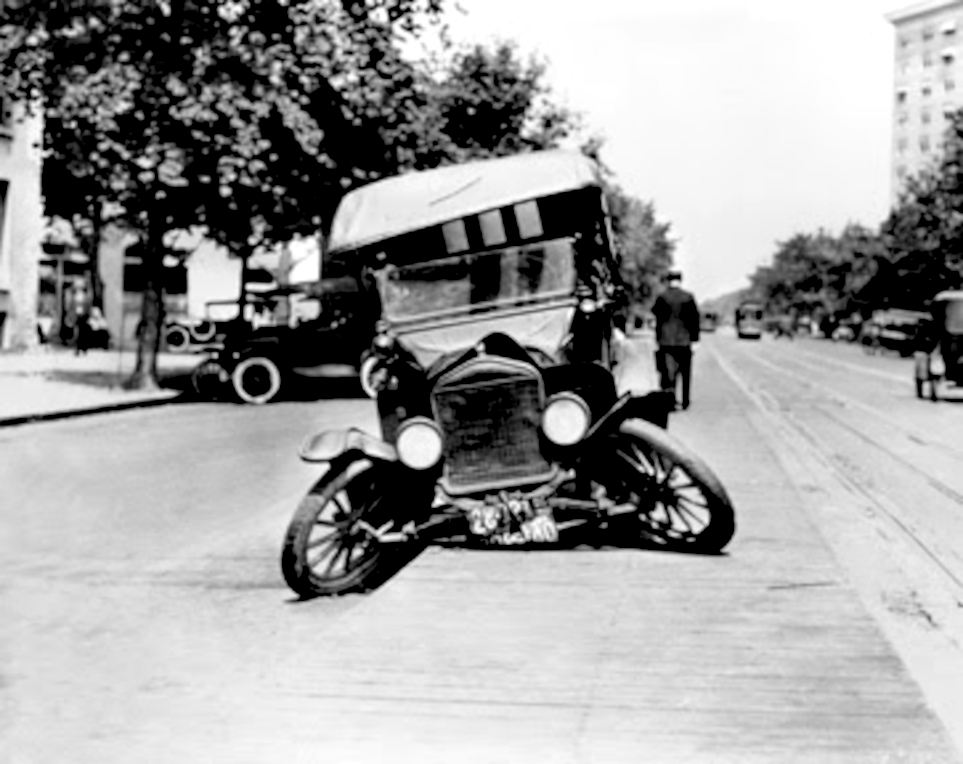
It wasn’t press night but she could still be late home. Sometimes the Weekly News would send her off on some errand that might not turn up a story at all and she would clatter into the flat at seven or eight in a scratchy, liverish temper and the food he’d kept warm would not be well received. Tonight the downstairs door slammed way past dinnertime and she came up the stairs with more than usual vigour. It’s going to be one of those nights, he thought, and wished it wasn’t as he’d spent his day repairing the inlet manifold on a Vauxhall Corsa that should have been laid to rest three or four MoTs ago. Sometimes he hated having his own workshop, taking as he did every job for fear of missing income.


M.Robbins

“Is that you?” he called.

“No, it’s Putin, you pillock.”

“Oh.” He went on looking at the screen. “I should’ve made borscht then. Next time.”

“You could at least turn the volume down when I come in.”

“Sorry. Third Test from Headingley. They’re following on.” He looked round. “Shall I peel you a grape, dear?”

“Perhaps you’d better.” She slumped down on the sofa. “I had to go to Market Sinking.”

“You mean Market Deeping,” he said.

“No, it’s sunk. It’s like Wisbech but worse. Anyway, I went to interview this old engineer bloke in a care home, he’s a hundred.” She flipped through her notebook. “Had to get his life story. Didn’t understand half of it. I asked how he started off and he said” – she looked at her notes – “in 1938 he was apprenticed at 14 to King’s Lynn Shed, whatever that was, cleaning B12s, whatever they were. Then in the war he was servicing Beaufighters in the western desert, whatever and where that means. Then he mentioned something called sleeve valves which were jolly awkward.”

“The B12 was a steam engine in the eastern region that used to haul trains to Liverpool Street, back then,” he replied. “The Beaufighter was an aeroplane. Its engines had sleeve valves, which go round and round instead of up and down.”

“That’s illuminating,” she said.

He looked at her and sensed an unusual mood. “I fancy a Broadside if you do,” he said.

“I would love a Broadside.” She kicked off her boots, sat back and watched as he went to the fridge and opened two bottles of beer. “He said something that made me think about you,” she called. “About the workshop. He said guys won’t work on engines and things the way he did, soon.”

He handed her a bottle. “No,” he said. “We won’t.”

She looked up.  ”You say that too?”

“Oh yes. I should never have bought the workshop. What did he say exactly, anyway?”

“That everything’s evolving. Hang on, I’ve got the quote here.” Like most young journalists now, she knew no shorthand; but she took out her recorder and wound back the file. “Listen to this.” And he heard her voice say: “How have things changed over the years?” She had kicked herself as she said it; it had seemed so trite. But his voice answered clearly enough, if a little quavery.

“Young lady, tell me how you will start your car when you leave here.”

“Oh. Well, I shan’t,” she said. “They key is in my pocket and it talks to the car. As I come up to it the door handle will come flip out and when I get in and touch the brake, all the systems will turn on.”

The old man looked back at her, smiling, one of his eyes watering a little. ”Now, my first car, I went out and started it with a starting-handle,” he said. “There was a self-starter, but it never worked.” He thought for a minute. “If that car was still with us it’d be 105 years old.”

She laughed.

“Thing is, your car now, it doesn’t even have an engine, does it?” said the old man’s voice. “Just an electric motor. And that’s as it should be. Think about an engine. Each piston begins its cycle by sucking in fuel on a downward stroke, compressing it on the upward stroke, being driven down by combustion on the next stroke and then expelling the waste gases on its exhaust stroke. With four such pistons, there are one hell of a lot of moving surfaces, all going in different directions at any one time. So the cylinders that are moving a large surface area that constantly changes direction, meaning that it must also accelerate and decelerate a great deal of mass. And there are belts or chains from the crankshaft will drive the shafts that open and close the valves at the top of the cylinders, and will also turn the water pump that cools the engine and will drive the alternator.”

“Gosh,” she said on the tape.

“Now, let me tell you,” the old man went on. “Good engineering gets simpler. Not more complicated. But petrol cars are very complicated. The most modern of petrol cars is a demented Heath Robinson device that flies in the face of physics. An incompetent child might make one with a Meccano set.” He paused briefly again, then said: “Things evolve, see? They change. They’re changing now.”

“If you were still a mechanic, would you stay one today?” she asked.

“Bless you, no,” he said, and she remembered his smile. Then he had fallen asleep.

She stopped the playback and looked at her partner. He nodded.

“I wanted my own workshop so badly,” he said.

“I know.” She took a gulp of beer. ”But the world is changing, isn’t it? We got to change with it. I will, too. The Weekly News is nearly dead. People post their own news online now.”

“I guess we’d better evolve then,” he said. They were silent for a few minutes, then he glanced at the screen; he’d muted it. “Been a crap season for England,” he said.

“Well some things don’t change, do they.”

He laughed, then frowned. “I’ll sell the workshop,” he said. “We’ll do some thinking, you and I. We’ll be all right.”

“’Course we will.”

He didn’t turn the sound back up; instead they sat there in the quiet as it grew dark. They felt oddly happy.


More flash fiction from Mike

Who Killed Walter Williams? Don't ask, even now
A Difficult Life When the world dislikes your birth
Come and See the Chickens A rather English love story
In Search of a Plot  Be careful. Elspeth may put you in a bacon slicer
A Question of Character Pity the nation...
The End A gun on a brownstone roof
The Last Time A figure skater leaves the ice
After the Flood An end? Or a beginning?
Remembered Time The past is a dangerous place
A Train Journey One's sister comes to visit
Time After Time When you have to warn the children
Fashion Wokeness and subversion. With style
A Time of Darkness It doesn't repeat. But it rhymes
Another Time A tear in the fabric
When Time Stands Still A hurricane lashes Pershing Square
A Man For All Seasons Net zero.The Stranger's Bar. And a three-line whip
A History Lesson Why do we study it?
Parallel Worlds Heat pumps and lentils. And a nice glass of Marsala
The Creatives Meeting a tech bro
Homecoming A sort of love story
Solitude A Cold War memory
Rhodri Hactonby's Maps A question of social geography
Hiraeth A yearning…
Strange Places A spirit in the sky 
A Sideways Journey Things might have been different
Displaced Encounter on E94th Street
Belonging Do you? Where?
Leaving Home A house has memories

Mike is now also on Substack at https://mikerobbinswrites.substack.com/

Mike Robbins’s latest book, On the Rim of the Sea, is now 
available as a paperback or ebook. More details here.


Saturday, 28 June 2025

Flash fiction: When Time Stands Still

 A hurricane lashes Pershing Square

That night I went to meet Cara, it was October and it was raining. October is great in New York City; the humid heat of summer is gone, fall’s not here in strength yet and the sun and skies are mellow. But now and then in September and October there’s a tropical storm or a hurricane in the Caribbean and it moves up through the Mid-Atlantic states and on to New England. That’s where hurricanes go to die sometimes. But they’ll lash out, full of spite, one last time on the way and it’s us that catch that.

M.Robbins

So I walked from my office to the cocktail bar at Pershing Square, right opposite Grand Central. The rain was like horizontal and the wind whipped at  my umbrella, it was one of those small ones you buy for four bucks at the newsstands, and it blew inside out and of course I couldn’t get it straight again.

I do love Cara. I always did. I met her in the eighth grade. I was little, short, nerdy. She’d grown fast and was adult height and strong and all the boys were after her already for her deep grey broad-set eyes and high cheekbones and even then she moved like a dancer. I guess I was always dazzled, always in awe.

But she’d be rough sometimes.

That was how I got to know her. She’d never seemed to notice me but then Gina the class animal had me in a corner and was stealing my Metro card and I was going to have to walk home, and it wasn’t the first time and I guess Cara must have noticed because she came over and she pinned Gina against the lockers and spoke to her very quietly and I didn’t hear what she said but Gina had this look on her face like she was just about to be dragged down to hell. She never laid a finger on me after that. Cara didn’t say much then but I sort of felt she was always there and as we grew older we became friends. But she was out of my class. Just such looks and charisma. The guys clustered round her like flies and she loved that, and she was always full of attitude. Me, I just got nerdier by the month. The boys passed me by.

But she had time for me somehow. Not always. She was a people magnet. But now and then she’d shake everyone off and find me in whatever quiet corner I was in and just hang out. She’d ask me how I was doing. When we were in sophomore year at high school I was confused and upset and desperate and I knew she was already having sex and I asked what I should do and she said “Nothing till it happens. You do you”, and hugged me.

Now and then she came round to our place on the Upper East Side and my parents always liked her and said how pretty she was, but she never said much when she was there. I knew where her folks lived, between Amsterdam and Columbus around 100th St on the West Side. I never went there. She never asked me. And now and then I sensed a hole in her armor but I never searched it out, why would I. People do that, don’t they? They search out each other’s weak points, even when they love them. I do that. But I’d look at her and remember that animal Gina backed up against the lockers, her eyes open wide as she stared at the demon that was about to disembowel her, and I’d think no, this one’s on my side.

Then we graduated high school and I went off to Wellesley. Mom and Dad were pleased I suppose, though they didn’t really say so. Not proud or anything, they just sort of felt that going to Wellesley was what one did. Hillary Clinton went there, and Madeleine Albright, and Nora Ephron. Good for the strong Democrat woman they’d brought me up to be. Then I got this job with the Senator. Cara went off to a college somewhere in the Midwest, dropped out and came back to work in sales. She moved into real estate and did OK. Not great, but OK. But she was always in some scrape or other, often with someone else’s husband. I can’t blame them I guess. She got more and more beautiful as she reached 30. And somehow her life got more and more chaotic.

Anyway, that wet night I got the wait staff to put me by a window. She was late and I looked out at the sheets of rain blowing under the Park Avenue underpass. I got stuck into a margarita, and then a second. I’d sort of drifted away when suddenly she sat down opposite me. Then she half-rose and leant over to kiss me. She leaned back and I saw she’d tinted her hair, a mild mauve on top and green down the sides where it fell on her shoulders, and her skin was a perfect ivory and her mouth strong and funny and her eyes seemed bigger and greyer than ever though there were slight creases at their corners that I hadn’t seen before. She asked for a glass of red wine.

“You want small, medium or large?” the waitress asked.

“Enormous,” she said.

“You got it.”

We made small talk for a minute or two, but there was something on her mind. She looked at me. “I just got fired,” she said.

“Oh God, again? What for?”

“Bringing my employers into disrepute,” she said. Her wine arrived quickly and she took a big slug.

“Oh Cara. What have you done this time?”

“I had sex with a client, his wife found the pictures, she put them on Porn Hub and sent the link to the other clients,” she said.

“Oh God,” I said.

Fact was, Cara sucked at life.

“Cara,” I said, "you suck at life.”

“I suck at life,” she said.

We looked at each other and started laughing. She drained her wine. The waitress reappeared. “You want another big one?” she asked.

“Humungous, please,” said Cara.

“Sure,” said the waitress. “You want I use a fire hose?”

“I hope the pictures were good,” I said.

“They were epic,” she said, and laughed. And then she didn’t.

“You loved me for something good I’d done,” she said. And her face sort of froze, and she put her glass down, and she looked at me and that mouth was out of shape and that’s when time stood still as I wondered if she would get a grip, not caring about anything, as she never did; or if something was different this time. It was different. I suppose we stared at least other for thirty seconds max but it felt much longer, and then she was all right.

“You should worry. No-one would put me on Porn Hub,” I said.

“You’d be surprised,” she said. And we both laughed but we knew we were different now, and she needed me.

M.Robbins


More flash fiction from Mike

Remembered Time The past is a dangerous place
A Train Journey One's sister comes to visit
Time After Time When you have to warn the children
Fashion Wokeness and subversion. With style
A Time of Darkness It doesn't repeat. But it rhymes
Another Time A tear in the fabric
Evolution The world is turning
A Man For All Seasons Net zero.The Stranger's Bar. And a three-line whip
A History Lesson Why do we study it?
The Creatives Meeting a tech bro
Homecoming A sort of love story
Solitude A Cold War memory
Rhodri Hactonby's Maps A question of social geography
Hiraeth A yearning…
Strange Places A spirit in the sky 
A Sideways Journey Things might have been different
Displaced Encounter on E94th Street
Belonging Do you? Where?
Leaving Home A house has memories

Mike is now also on Substack at https://mikerobbinswrites.substack.com/

Mike Robbins’s latest book, On the Rim of the Sea, is now 
available as a paperback or ebook. More details here.

Sunday, 25 May 2025

There’s Green. And there’s Green

Two very different ways to see climate action

I have known the bare facts about climate change for a very long time but for years it was unreal, something that I knew was happening but did not think of in the way I would of (say) impending war. Even when I started researching my PhD on climate and agriculture in 2003, I felt oddly dispassionate  although we knew by then that we might be in serious trouble.

I can remember when it did first chill me to the bone. It took me by surprise. It was 2007 and I was in Bangkok; the British Council had flown five of us 6,000 miles to discuss climate change. We had just finished a day with colleagues at Chulalongkorn University and colleague Matt and I were on our way to buy Thai presents for our respective partners.

“I’m getting frightened,” I said, quite suddenly. “The climate, I mean. What’s going to happen? To all this?” – I waved vaguely at the street – “to us?”

Matt was briefly taken aback, but he recovered. “There’s no point in thinking like that,” he said firmly. “Do something about it.”

Mike Robbins

He was right of course. And I’ve just read two books by people who really want to do something. Both are Green Party members; one is a former party leader, while the other has twice stood for Parliament as a Green candidate. They are both good books, but they present – unintentionally, I think – two very different ways of being green. The contrast has made me wonder what kind of environmentalist I am, and has crystallised my own feelings somewhat.

First, Natalie Bennett’s book is titled Change Everything. She is not joking.

*

Bennett was born in Sydney in 1966. She graduated in agricultural science then became a journalist on the Northern Daily Leader in Tamworth, New South Wales. She later served as a volunteer for some time in Thailand before joining the Bangkok Daily Post. In 1999 she moved to Britain, where she had a successful career in Fleet Street, ending up as editor of the Guardian Weekly. In 2012 she decided she’d had enough of journalism and stood for and won the leadership of the Green Party, which she had joined some years earlier. She served two two-year terms, and although not in Parliament, she led the party into the 2015 general election.


I was overseas but remember hearing her interviewed during the campaign and thinking her more sincere, and clear about her beliefs, than the other party leaders; she did not evade a question, and was clearly not in thrall to spin-doctors. But not everyone was as impressed (there was a  notorious interview on LBC that did not go well), and she decided not to seek a third term. Even so, the Green Party had done well under her leadership. She now sits in the Lords, where she is active.  

Change Everything is Bennett’s statement of belief for Britain. She begins by stating simply that our whole moral and economic system is wrong. Green philosophy, she says, “believes in the power of human caring and creativity when freed from the deadening hand of our present oligarchy.” Our system has, she says, ossified; we have been run by a bunch of Oxbridge PPE students who have all read the same political philosophies. …the key ideas that neoliberal and social democratic visions …share in their narrow, so similar, understandings of the world.”

In fact, since the July 2024 election many of these Oxbridge PPE graduates are gone from government. But Labour seems bound by at least some of the same ideas, so Bennett still has a point. She challenges several fallacies, as she sees them: that we must have growth; that everyone must have a ‘job’ in the conventional sense, regardless of its value to society; and that individuals, and nations, must compete with each other.

Her thoughts on work are especially well put. In our system, there are plenty of things that need doing but aren’t done because they don’t pay. But many conventional “jobs” don’t pay anyway, so that people need some sort of income support. Bennett’s answer is Universal Basic Income, or UBI; that is, everyone receives an income that enables a decent life. They can seek work that gives them additional earnings if they wish – or they can rely on UBI and develop their own talents and interests, and/or do work that needs doing in the community.

I am sympathetic to UBI and want to believe it might work, and it might even become an imperative as technology, including AI, displaces existing jobs. But I can’t forget a magazine article I read in about 1970 (yes, I was very young). It assumed that technical progress would give us the time and resources to be everything we wanted. Several random people were invited to try the activities they would pursue; one had a flying lesson, another went hospital visiting. But this future never happened. The magazine assumed the wealth created by new technology would reach everyone but that is not how the world works; the internet and e-commerce have created massive wealth, but it resides with Jeff Bezos and Elon Musk. UBI is not possible without a redistribution of wealth. Moreover it will mean some people working, others not; the venom already directed at folks on benefits should warn us how this might be taken. I would like to see UBI. But I think Bennett is asking for more than she realises.

There is much more in this book. On education, for instance; Bennett hates the way we bully children with exams, SATS etc. In her view it achieves little and just makes them miserable. I am strongly with her here. (She has recently advanced these views in the Lords while speaking on the Children’s Wellbeing and Schools Bill.) I also agree with her on government’s insistence on ‘economically useful’ subjects; in recent years we’ve seemed to know the price of everything and the value of nothing.

She rails against wastefulness – in the fashion industry, for example, which generates piles of unwanted clothing, and the commercial horrors of Christmas, which have always grossed me out as well. And in general, she wants some big changes to the way we live and think. She refers to “the key ideas that neoliberal and social democratic visions of society share in their narrow, so similar, understandings of the world.” It is unfair to bracket the social-democratic tradition with neoliberalism in that way. But it’s true that Labour, and its equivalents elsewhere, now share the same ideas of growth and linear progress. Bennett does have a point here. And in general, there is a lot to like about her thinking.

Into the phalanstery?
But I have some misgivings. Bennett has strong views about some things. These include gene editing, which she opposes (again, she has recently spoken on this in the Lords). She is not wrong to have reservations about this; I also do. But the examples she uses in the book, Roundup-ready crops, are not a good example of what crop breeders actually do with molecular markers. And she can be sweeping; the US is, she says, a “white-settler empire” – a brusque dismissal of a complex country of 331 million where I lived for years and have much-loved friends.

More seriously, Bennett’s vision is a little all-encompassing for me. Utopianism has a long and troubling history, from Charles Fourier’s 19th-century phalanstère, or phalanstery – a quite detailed design for a commune – to the collective farms of the Soviet era. In the last century, attempts to impose left- and right-wing utopian visions on populations have had terrible consequences. There is an inherent link between utopianism and authoritarianism, because the utopian seeks to define so many aspects of human activity. There is a sign of this when Bennett talks about advertising of consumer goods that she feels (often rightly) we do not need. “The Green alternative is to clamp down on this unhelpful, stressful bombardment,” she says. “There is no ‘right to advertise’. We can choose what to allow.” Can we? She asks, for instance: “Do we really need ‘smart toasters’?” No, of course not. But if my neighbour wants one, have I the right to stop that – or forbid someone from advertising them?

Mike Robbins

It would be insulting to suggest that Bennett herself is authoritarian. Politically, she wants more freedom, not less; she questions (rightly in my view) whether the UK is really a democracy and sees the urgent need to reform the system. On a deeper level, her ideas on UBI and education are clearly aimed at letting the individual develop in their own way. Moreover smart toasters are a bad example; there are some constraints we might have to accept in future (including on what we eat; more on this in a minute). Even so, it is best not to have too broad a vision of the world you want.

But maybe we do need that green view of the world? If you acknowledge the threat of climate change but want to keep your way of life, you’re in effect saying we can fix climate change with technology. Bennett wants more than this. There is no technology in this book, she says: ”All those things are important and necessary, and there are lots of books about them, but their authors generally have a vision of a business-as-usual society with modern technology. …I mean something far more fundamental and transformative.”

However, one can want a better world, as she does – but still accept that it’s only science and technology that will save us right now, and that for the moment they are the priority. Which brings me onto the second of these books, Chris Goodall’s Possible.

The road to Net Zero
Chris Goodall is a researcher and writer on green technologies and their economics. He runs an interesting, if intermittent, green newsletter, Carbon Commentary. He also lectures, has the odd green business venture and has twice stood as a Green Party candidate for Oxford West and Abingdon (most recently in 2024 against the high-profile LibDem Layla Moran; he did quite well).

I first heard of him in 2016 when he published The Switch, in which he set out the potential for solar power – which he foresaw being our main source of energy by mid-century. I think he might have overestimated solar in relation to wind. Even so, progress since 2016 tends to bear out many of his predictions; for example he saw potential in perovskites, and it looks as if he may have been right. A later book, What We Need to do Now (2020), set out the potential for green hydrogen – Goodall is a hydrogen fan; but, almost as an aside, he doubted that it would be economic for road transport. I thought this odd at the time. But again, he’s turning out to be right.

Now, in Possible: Ways to Net Zero (Profile Books, 2024), he has sketched out just what we need to do to get to net zero by 2050. Goodall is not here to spread impending doom but to show us how it might be avoided. To this end he sets out how the main challenges really can be met, including in hard-to-emit industries like shipping, steel and ceramics. It is an ambitious book but practical and focused, and I found it very encouraging.

Goodall’s basic thesis is simple: To get to net zero we’ll have to electrify pretty much everything, including heavy machinery, so that we can run on renewable energy. But there are three major obstacles. First, we will need one hell of a lot more electricity. Second, intermittency; we’re going to need to store a lot of power to guard against drops in solar and wind energy. And third, we must mitigate emissions from industries that can’t be electrified – because they use processes that require too much heat (steel, ceramics), or because batteries are too heavy (aviation).

On the first point, Goodall says we produce about 27,000 terawatt hours globally a year and that this could rise to as much as 90,000 by 2050 if we are to realise net zero. Given that four-fifths of the world’s energy supply does still come from fossil fuels, is this really possible? He thinks yes, that the current rate of expansion in green energy as documented by the International Energy Agency (IEA) has us on target to get there. Still, in the UK’s case we will need about twice as much electricity as we have now. But Goodall quotes a study that thinks we can do it using solar and wind with hydrogen as storage, and without the need for gas-fired backup. He admits not everyone accepts that (and is not against nuclear if we need it, but doubts if it is economic).

For intermittency, he thinks we will need three basic types of storage: Batteries for very short-term smoothing-out; pumped hydro for slightly longer duration; and stored hydrogen for longer periods. The first of these is working increasingly well in California, so why not in the UK. But pumped hydro involves large construction projects, which will be subject to delays and cost overruns (Australia’s Snowy 2.0 is a warning here). Moreover England’s topography is not great for such schemes, although Scotland’s is better.

As for hydrogen, Goodall thinks the UK needs to store two months’ worth. But this is an awful lot of hydrogen. To put it in perspective, the boss of Centrica, Chris O’Shea, has just (May 2025) said that the UK has about 12 days’ supply of gas – which is easier to handle than hydrogen –  and half of this is in a single place, the Rough storage facility, the future of which is under discussion. Goodall sees the hydrogen being stored underground/undersea, perhaps in what used to be gas storage facilities. He is not being fanciful; large-scale geologic storage of hydrogen is widely seen by scientists as feasible if the geology is right. (In fact Centrica wants to use Rough partly for hydrogen.) Even so, the amount of new storage needed would be huge. And this assumes we can make enough green hydrogen, which will require a lot of green energy.

But Goodall sees nothing insuperable and maybe he is right. What is great about this book is that he is clear about the difficulties faced – then explains how they can be overcome. For example, the third obstacle is hard-to-mitigate industries; Goodall has talked to people who work in these (they include cement, steelmaking, glass and ceramics and shipping) and found that they are pursuing solutions and making them work. One of the most encouraging initiatives he looks at is Sweden’s H2 Green Steel, now renamed Stegra, which is building a steel plant with an integrated electrolyser to make hydrogen in situ, using hydropower. It is not the only initiative of this type.

Equally interesting is his look at shipping, which is one of the most polluting sectors and seen as very hard to mitigate. But ships could be fuelled with e-methanol, which can be made from captured CO2 and green hydrogen; and Maersk have already built a dual-fuel containership that uses methanol. This could also have other uses; not long after reading the book I heard about the Farizon G2M, a Chinese truck that runs on methanol made from captured industrial CO2 emissions.

The caveats
I had the odd doubt when reading this book. Goodall believes that carbon capture and storage (CCS) will be necessary on a large scale, involving the capture of CO2 at its point of emission from industrial sites and its storage underground, possibly in depleted oil wells or aquifers. One objection to this (which Goodall acknowledges) is that it can be a disincentive to industry to cut its emissions. In fact there is much controversy over CCS on these grounds, especially in the UK following the 2024 announcement of a £22bn investment in it by the Labour government. And there may be other pitfalls; what about leakage from insecure sites, resulting in unaccounted-for carbon emissions? I have even wondered if this might be dangerous, especially if the CO2 is under pressure; it is, after all, an asphyxiant and about 2,000 people died after a release from Lake Nyos in Cameroon in 1986.

Goodall would obviously understand these objections but thinks we cannot afford not to include CCS, at least for now. He may be right, but I would rather see any captured emissions turned into useful products – something Goodall alluded to in The Switch but says little about here, although he does discuss e-methanol for shipping. The potential for greater use of CO2 was outlined back in 2019 in a report by the International Energy Agency, Putting CO2 to Use: Creating Value from Emissions. This report did see the difficulties, in particular the amount of hydrogen that might be required to produce fuel from CO2. But Goodall is well aware of this and since the book was published he has argued on Carbon Commentary (January 2025) that CCS might make more economic sense than synthetic fuels, at least for now.

I also questioned some of Goodall’s chapters on food and agriculture. This is an important source of emissions, but some of it can be mitigated. He looks at livestock farming, a source of emissions, and the sequestration of carbon dioxide through agriculture, which is a potential sink. The latter was the subject of my own PhD and I later wrote one of the first books about it (Crops and Carbon, Routledge 2011). Goodall may underestimate the difficulties in getting useful data on the carbon content of a farm; it is not solely about measurement. That presents challenges of its own, but there are also difficult questions around baselines, additionality and especially permanence.

Mike Robbins

But more worrying for me is his approach to livestock farming. Goodall points out, rightly, that our taste for red meat is a major driver for climate change. Cattle and sheep are ruminants, and their digestive processes emit large amounts of methane. Goodall says cattle farming is responsible for about 8% of global emissions. He does not say where he got this figure, but it’s in the ballpark (the UN’s Food and Agriculture Organization thinks it’s 7%). We are going to have to confront this.

However, Goodall may not understand the importance of crop-livestock integration in the maintenance of soil fertility, especially in regions where farmers cannot afford N fertiliser (a serious source of emissions in itself). In fact he is quite dismissive, saying many researchers regard rotation with livestock as ‘nonsense’. In fact, it is an important part of many farming systems, and maintaining carbon sinks in agriculture may be difficult without it. He also advocates the use of no-till agriculture to increase soil carbon content; this is not wrong, but it usually involves the use of crop residues and again, in many farming systems these are needed for animal feed. Getting rid of animals is not the answer. They are often essential to the farming system and would not always be replaced by crops – in fact, in large parts of the world this might be disastrous, especially on steppe.

There is also a trap that some Greens seem too ready to walk into: a culture war about eating meat. The fact is, people do. And whether they should or not, they are not going to want to be lectured about it. Or about their choice of toaster.

It’s not easy being green…
But in general, Goodall’s is a pragmatic approach: How do we do this, and save our necks? Bennett by contrast has firm ideas about who we should be. Moreover, although she never says it, she seems somehow to feel that technology shouldn't save us; we should change who we are instead. It would be wrong to see this as a gulf between two individuals; Goodall, like Bennett, is a committed Green, and Bennett does do real-world politics – her record attests to that. In fact they probably know each other. I doubt they would see themselves as having any real ideological difference. Even so, these two books seem to exemplify two very different approaches to being green.

I am happiest with Goodall’s. There are three reasons: Practicality; the dangers of culture wars; and my distrust of utopianism. The last two, in particular, are real threats to the Green movement and they are interrelated.

First, practicality. We are already set to overshoot the 1.5 deg C target agreed at Paris, and this was not random; it was based on what was seen as sustainable. I don’t think we can wait for human beings to become perfectible in nature. We need science and technology to save our sorry ass right now.

Second, renewables have become the subject of a culture war launched by the right. This was predictable. In the UK it’s been spearheaded by Reform, a right-wing political party that gets its funding from sources close to fossil fuels. We are dealing with some quite unpleasant people and we should not hand them sticks to beat us with. I don’t think we’re going to have much luck ordering people to completely change their lifestyles. It’s not a question of whether they should or not; they won’t do it. And telling people whether or not they are allowed a smart toaster, or trying to make them stop eating meat, will be a gift to the other side whether it is justified or not. No-one likes to be approved and disapproved of.

But third, anything that smacks of utopianism should be avoided. Governments must, sometimes, tell people what to do. They must never tell them what to be. Bennett is an exception in some ways, perhaps, because so much of what she wants is profoundly decent, and her concern for individual freedom is clear. In general, though, utopianism has an awful history. Those of us appalled by climate change must work for and with all decent humans, including those with smart toasters. If we don’t, we may one day look just like the fools that have brought us to this.


Mike Robbins

Natalie Bennett's website includes updates on her work in the Lords.
Chris Goodall’s Carbon Commentary can be found 
here and also here.

The pictures in this post were taken by the author at a climate-change demonstration in New York on September 21 2014. More of them here.

Thanks to Neil Monk for taking a look at a draft of this piece.


If you liked this, try...

Straight from the Sun
The inescapable logic of renewables

Short fiction: A Man for All Seasons
An MP confronts Net Zero

Short fiction: After the Flood
An end? Or a beginning?

Short fiction: Evolution
A brave new world

And...

Politics on the Edge
A look at Rory Stewart’s landmark political memoir. Should you read it? Yes – but it leaves some things unsaid

Attlee, Bevin and the New Jerusalem
Clement Attlee’s government transformed Britain at home. Abroad, his Foreign Secretary Ernest Bevin did much to shape the postwar world and its alliances. What brought these two very different men together? And who were they really?

The Red Wall – How Labour Lost its Safest Seats
In 2019 Britain’s Labour Party saw its northern strongholds collapse. Why? It is still important to know

If Not Us, Who? If Not Now, When?
A story of courage and resistance from inside Nazi Germany

Love in the Time of Brexit
The 2016 Brexit referendum divided Britain along class lines. Why? Two shrewd, gripping novels on Brexit, class and the dynamics of division

The Polish Anne Frank
The haunting diary of Renia Spiegel

The First Book on the Pandemic…
…appeared in April 202. Slavoj Žižek on COVID, lockdown – and the migrant crisis

Two Fine Novels Inspired by Climate Change
A look at two novels, from American writer Kevin Brennan and the UK’s Alison Layland. They’re very different books, but both show an acute understanding of climate change and the way it shapes the zeitgeist

Doctor in Jail
What are our prisons really like? Two very vivid books by prison doctors – one British, the other American; they pull few punches

The Endgame in the Age of Stupid
Could our society collapse? Yes, and it might be happening right now. Not that I want to alarm you, of course

Why Nations Fail
Daron Acemoglu and James A Robinson shared the 2024 Nobel Prize for Economics. Why? And did they know what they were talking about? A look at their landmark book, Why Nations Fail

Why Europe? Peace, That’s Why
The European Union was never wholly, or even mainly, about economics. It isn’t now

An Anthology of Anger
The Anti-Austerity Anthology is the work of many angry, and sometimes very funny, writers

Tonight in the House: Murder, Booze and More
Jeremy Thorpe, a  shocking scandal – and Britain’s House of Commons at its boozy, bonkers best

What is Populism?
Well you might ask. A look at populism, how it’s defined, and how it works

Inequality and Democracy: Can they Coexist?
And if not, what will the endgame be? Revolution? Or gradual decline?

A Higher Loyalty
Who really is James Comey? And what is his beef with Trump? His autobiography, A Higher Loyalty, gave some of the answers – and was better than I expected

Brexit: Reading the Runes
Brexit and British Politics is not the first book about Brexit, but it’s a shrewd and convincing analysis. This referendum wasn’t just about Europe

Being Beastly in Fleet Street
A brilliant, savage new satire on the Street of Shame. But it’s not the first

On Truth and Lies. And How to Show a Troll the Difference
A keyboard warrior’s workshop manual

Don't like anchovies? Don't bother voting, then
There is more than one threat to democracy in Britain, but the worst is an electoral system that seems set up to sabotage it

Post-Factualism
Brexit, the fragmentation of the media, and the rise of post-factual politics

Thinking of Voting Leave? I’d Have Done, Once
From the time of the Brexit referendum

When the Best Lack All Conviction
Two women who didn’t: Rachel Corrie and Heather Campbell

The English Defence League. Served Hot and Cold
Two books looked at the EDL – in very different ways; one was academic, the other more journalistic. Both were good books, and both still have something to tell us about the Right in Britain

Rear-View Mirror
Blood, sweat and tears go into TV programmes and they’re soon forgotten. Or are they? …And do they leave us with shared memories? A very personal look back at some programmes from the 1970s

Cameron’s next five years
In 2015 British Prime Minister David Cameron unexpectedly won re-election with an absolute majority. These were my predictions for his next five years. I got some things rather wrong. But not all of them

So, who were we?
Three Seasons is a book of three novellas, unconnected with each other, but all set in the south of England in the 1980s. These three stories are portraits of a country and its people on the verge of change

Margaret Thatcher: Unintended Consequences
A piece written on the death of Margaret Thatcher. Did she really transform Britain as she intended? Or did she actually fail to do so, leaving a vacuum where institutions had once been? Some thoughts from 2013

Can the Lentil Save the World?
Well, that might depend on your digestion. A look at the science behind a popular crop. And some rather nice recipes

It’s the Science, Stupid. Or Is It?
Science is under attack. Both Left and Right cherry-pick from its conclusions; they accept or reject climate science or advances in biotechnology according to their prejudices, and examine the evidence on neither. This is dangerous, for all of us

Dimensions of Democracy
What is democracy? Do we oversimplify it?


Mike is now also on Substack at https://mikerobbinswrites.substack.com/

Mike is now also on Substack at https://mikerobbinswrites.substack.com/

Mike Robbins's book On the Rim of the Sea is available as a paperback or ebook. More details hereFollow Mike on Bluesky or X or browse his books here.